When Jagex announced they were bringing Gielinor to the tabletop, veterans of the MMO had questions. Could a game defined by endless grinding, evolving skills, and player economies really translate to cardboard and dice? The answer came in 2020 with RuneScape Kingdoms, a strategic board game that distills two decades of MMORPG heritage into a competitive experience for 1-5 players.
If you’re a RuneScape fan wondering whether the board game captures the magic of skilling, questing, and PvP, or a tabletop enthusiast curious whether this adapts the MMO well, this guide breaks down everything from core mechanics to where you can actually buy it in 2026. We’ll cover gameplay systems, component quality, expansion content, and whether it’s worth the investment for your game shelf.
Table of Contents
ToggleKey Takeaways
- RuneScape Kingdoms is a mid-to-heavy Euro-style strategy board game that authentically captures the MMO’s skill progression, resource management, and multi-path victory systems in tabletop form.
- The game supports 1-5 players with optimal gameplay at 3-4 players, featuring worker placement mechanics, a skill leveling system, and a Grand Exchange economy mirroring the digital version.
- RuneScape board game offers multiple viable strategies—combat dominance, quest rushing, economic control, and skill specialization—ensuring competitive replayability across different player counts.
- Available through Steamforged Games’ official store and major retailers at $70-80 USD, with optional expansions like Shadow of Elvarg adding campaign content and new quests.
- Best suited for RuneScape veterans and Euro strategy enthusiasts willing to invest in learning moderately complex rules, though the steep learning curve and reliance on expansions for long-term replayability may deter casual players.
What Is the RuneScape Board Game?
RuneScape Kingdoms is the official tabletop adaptation of Jagex’s legendary MMORPG. Released through a successful Kickstarter campaign in 2019, the game merges worker placement, resource management, and area control into a competitive race for dominance across Gielinor.
It’s not a cooperative dungeon crawler or a simple dice-chucker. This is a mid-to-heavy Euro-style strategy game where players represent emerging kingdoms vying for power by completing quests, training skills, battling monsters, and engaging in PvP combat. Sessions run 60-120 minutes depending on player count and experience level.
Game Overview and Core Mechanics
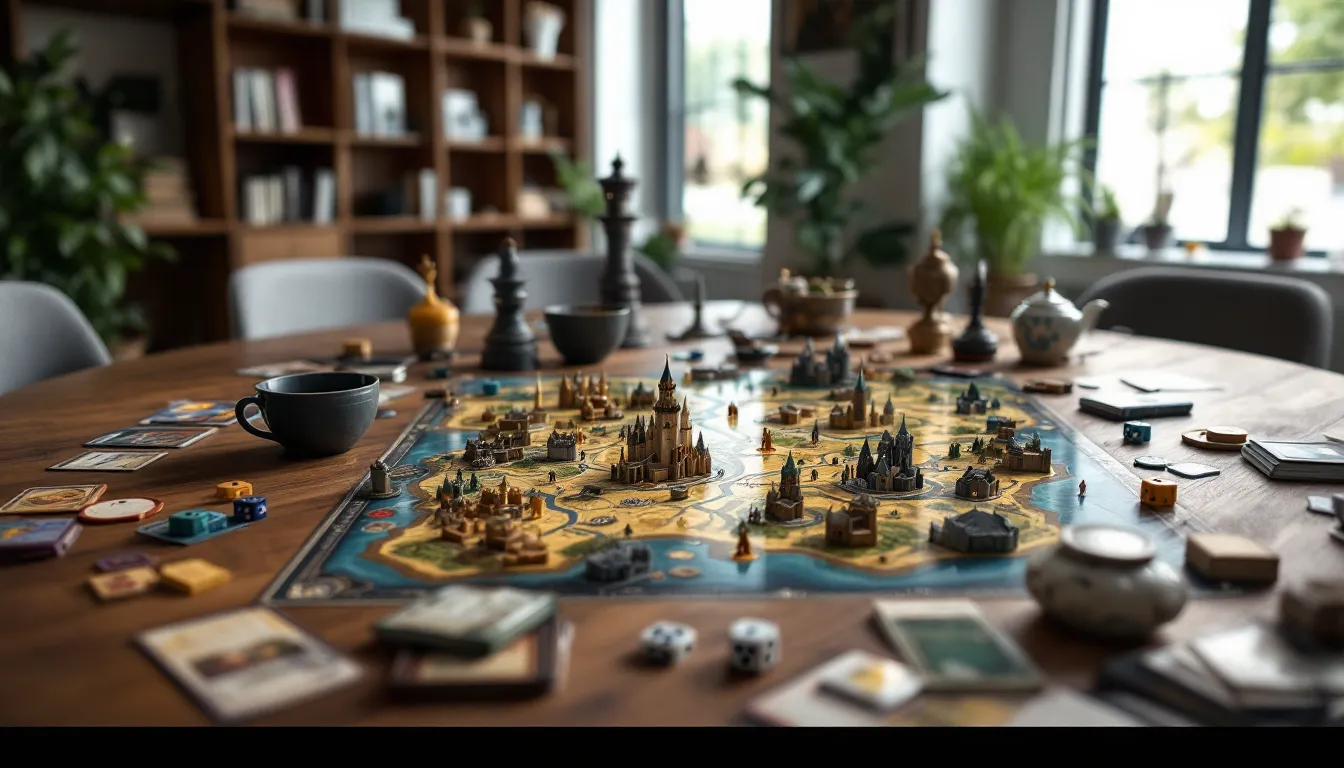
At its heart, RuneScape Kingdoms uses a worker placement system where players deploy followers to locations across the game board, Lumbridge, Varrock, the Wilderness, and more. Each location offers different actions: gathering resources (logs, ore, fish), training skills (Attack, Magic, Crafting), accepting quests, or challenging other players.
The skill system mirrors the MMO’s progression. Players improve skills by repeatedly performing related actions, unlocking higher-tier equipment and quests as they level up. A player who invests early in Smithing can craft superior armor: focus on Magic and you’ll unlock devastating combat spells.
Resources function as currency and crafting materials. Wood becomes bows, ore becomes armor, and food sustains you during combat. The economy is tight, every action costs something, forcing players to specialize or diversify strategically.
Combat uses a streamlined version of the MMO’s combat triangle. Melee beats Ranged, Ranged beats Magic, Magic beats Melee. PvP skirmishes occur when players occupy contested zones or directly challenge rivals, with gear and skill levels determining outcomes alongside tactical card play.
How It Translates the MMO Experience to Tabletop
The design team nailed the feel of RuneScape without drowning players in simulation. You’re not tracking individual XP gains or banking items in real-time, but the strategic arc matches the MMO experience: early-game resource grinding, mid-game skill specialization, and late-game competition for high-value objectives.
Quests function as victory point engines, just like in the digital version. Completing Dragon Slayer or Recipe for Disaster grants massive point bonuses, but requires specific skill levels and items. Rush combat skills and you’ll dominate PvP: focus on gathering and crafting and you’ll out-quest rivals.
The Wilderness area adds tension. High-risk, high-reward actions let you grab powerful loot, but other players can attack you freely, a perfect translation of the MMO’s most notorious zone. Anyone who’s lost a full inventory to a PK’er will recognize that stomach-drop moment when an opponent moves into your Wilderness space.
One clever touch: the Grand Exchange appears as a shared marketplace where players trade resources at fluctuating rates, echoing the MMO’s player-driven economy without requiring actual negotiation.
Release History and Current Availability
Kickstarter Campaign and Development
Steamforged Games launched the RuneScape Kingdoms Kickstarter in October 2019, partnering with Jagex to bring the project to life. The campaign smashed its funding goal within hours, eventually raising over £350,000 from more than 4,500 backers.
Backers received their copies in late 2020, with retail release following in early 2021. The game shipped with the core box plus optional add-ons including character miniatures, upgraded resource tokens, and the Shadow of Elvarg mini-expansion featuring the iconic green dragon.
Development took roughly 18 months from campaign launch to delivery. Steamforged’s experience with licensed adaptations (Dark Souls, Resident Evil) showed in the production quality, though some backers reported minor delays due to COVID-19 manufacturing disruptions, standard for 2020 Kickstarters.
Where to Buy the RuneScape Board Game Today
As of 2026, RuneScape Kingdoms is available through multiple channels, though stock fluctuates.
The Steamforged Games official store carries the core game and expansions when in print. Retail price sits around $70-80 USD for the base box. Major board game retailers like Miniature Market, CoolStuffInc, and CardHaus stock it periodically.
In the UK and EU, check Chaos Cards, Zatu Games, and local game stores that carry Steamforged titles. Availability varies by region, European stock tends to be more consistent than North American.
Secondary markets (eBay, BoardGameGeek marketplace, Facebook groups) sometimes list Kickstarter-exclusive editions with upgraded components at premium prices, typically $100-150. Unless you’re hunting specific miniatures or promos, the retail version delivers the full gameplay experience.
Digital storefronts don’t apply here, this is pure tabletop. No app integration, no digital companion. Just cards, boards, and strategic player interaction.
Gameplay Guide: How to Play RuneScape Kingdoms
Setup and Player Count
RuneScape kingdoms supports 1-5 players, with sweet spots at 3-4 for competitive tension without excessive downtime. Solo mode uses an AI opponent system called the Corrupted Kingdom, offering a solid challenge for single-player sessions.
Setup takes about 10 minutes once you know the drill:
- Assemble the modular game board (different configurations based on player count)
- Shuffle and place Quest, Event, and Equipment decks
- Each player selects a kingdom color and takes starting resources (3 food, 2 logs, 1 ore)
- Distribute starting followers (worker meeples) based on player count
- Reveal initial quest options and set the round tracker to 1
The game runs 8 rounds by default, though variants extend this to 10 or 12 for longer campaigns.
Turn Structure and Core Actions
Each round follows a clean phase structure:
1. Event Phase: Flip an Event card affecting all players (resource scarcity, monster invasions, double XP weekends, yes, really)
2. Action Phase: Players take turns placing followers on board locations to perform actions:
- Gather: Collect wood, fish, ore, or other base resources
- Train: Improve skill levels (costs resources, grants abilities)
- Quest: Attempt available quests (requires specific skills/items)
- Craft: Convert raw materials into equipment
- Combat: Challenge monsters or other players
- Grand Exchange: Trade resources at current market rates
3. Upkeep Phase: Collect passive income, feed followers, advance skill tracks, refresh locations
Actions resolve immediately when you place a follower. Most locations accommodate one player per round, creating competition for key spots, especially high-tier training areas and valuable quests.
Questing, Combat, and Skill Systems
Quests are your primary VP source. Each quest card lists requirements (skill levels, items, sometimes location control) and rewards (victory points, unique items, skill boosts). Early quests like Cook’s Assistant need minimal investment: late-game epics like Legends’ Quest demand multiple maxed skills and rare items.
Completing quests often unlocks new equipment or abilities, creating powerful combo chains. Finish Lost City and you might gain access to Dragon equipment: complete Monkey Madness for the Dragon Scimitar card.
Combat uses a dice-based system modified by equipment and skills:
- Attacker and defender reveal their combat style (Melee/Ranged/Magic)
- Apply combat triangle bonuses (+2 dice if you counter opponent’s style)
- Roll dice equal to your attack level + equipment bonuses
- Defender rolls using defense level + armor
- Higher total wins: ties favor defender
Monster combat follows similar rules but uses preset difficulty ratings. Defeating the King Black Dragon requires serious stat investment and gear, but rewards scale accordingly.
The skill system uses track progression. Woodcutting starts at level 1: each training action advances you one space, unlocking new gathering options. Reach level 60 Woodcutting and you can harvest Yew logs worth triple the resources of regular wood.
Skills synergize deliberately. High Fishing feeds your combat runs: Smithing turns Mining output into sellable armor: Magic levels unlock both combat power and utility effects.
Winning Conditions and Strategy Tips
Highest victory points after 8 rounds wins. Points come from:
- Completed quests (5-25 VP each)
- Controlled territories (1-3 VP per region)
- Skill milestones (bonus VP at certain levels)
- Defeated monsters and players (variable)
Strategies vary widely:
Quest Rush: Focus gathering and crafting early to complete multiple mid-tier quests before opponents can compete. Reliable but predictable.
Combat Dominance: Max combat stats, craft best-in-slot gear, farm VP through PvP and boss kills. High risk, if opponents avoid your fights, you waste actions.
Economic Control: Monopolize high-value resources, manipulate Grand Exchange rates, complete resource-hungry quests others can’t afford. Slow burn that scales hard in late rounds.
Skill Specialist: Race to level 99 in one skill for massive milestone bonuses, then pivot to exclusive quests only you can attempt. Vulnerable early but explosive late-game.
Key tactical tips:
- Don’t neglect food production. Running out mid-round cripples your action economy.
- The Wilderness is worth it if you can defend yourself. Avoiding it entirely concedes too many points.
- Watch opponent skill levels. If two players race for the same quest, the faster one locks the other out.
- Events can swing games. Plan flexible strategies that adapt to random effects.
Experienced players recognize the meta shifts based on player count. At 5 players, aggressive PvP becomes harder to execute: at 2-3, combat strategies dominate because defending is costly.
What’s Included: Components and Quality
Game Pieces, Cards, and Miniatures
The retail version of runescape kingdoms includes:
- Game board: Modular double-sided tiles forming Gielinor’s key regions
- 120+ cards: Quests, Events, Equipment, and Special Abilities
- 200+ tokens: Resources (wood, ore, fish, food, gold), skill markers, VP trackers
- 50 wooden followers: Meeples in five player colors
- 20 monster standees: Cardboard standees for enemies (optional miniature upgrades available)
- Dice: Custom combat dice with RuneScape iconography
- Player boards: Individual dashboards tracking skills and inventory
- Rulebook: 24-page full-color guide with example rounds
Kickstarter editions included upgraded miniatures for iconic monsters (Elvarg, King Black Dragon, Giant Mole) and optional player character minis replacing the wooden meeples. These weren’t essential but added table presence.
Component quality is solid for the price point. Cards use linen finish stock that shuffles well and resists wear. Tokens are thick punchboard, not flimsy chipboard. The wooden meeples feel substantial.
One complaint: the resource tokens could use more visual distinction. In low light, ore and coal tokens look nearly identical, causing occasional mix-ups. Minor annoyance, easily solved with a lamp or upgraded third-party tokens.
Board Design and Artwork
The board art directly channels RuneScape’s aesthetic, recognizable locations rendered in the game’s signature style. Lumbridge Castle, Varrock Palace, and the Wilderness Volcano are immediately identifiable to MMO players.
Card art mixes original illustrations with adapted game assets. Quest cards feature iconic scenes (fighting Elvarg, navigating the Underground Pass) that veterans will appreciate. Equipment cards show familiar gear with stat blocks that mirror in-game properties.
The graphic design prioritizes clarity over flash. Iconography is consistent and intuitive once you’ve played a round. Skill tracks use color-coding matching the MMO’s interface. Fans of deeper tabletop experiences have noted similarities to titles found in RPG strategy guides, where mechanical clarity meets thematic immersion.
One aesthetic choice divides players: the game uses Old School RuneScape’s visual style rather than RuneScape 3’s updated graphics. OSRS purists love this: RS3 fans feel alienated. Given OSRS’s larger player base, the decision makes commercial sense.
Expansions and Additional Content
Available Expansions and Add-Ons
As of 2026, RuneScape Kingdoms has limited but meaningful expansion content:
Shadow of Elvarg (2021): The first mini-expansion adds the Dragon Slayer quest line as a multi-stage campaign, plus Elvarg as a raid-style boss fight requiring player cooperation. Includes new equipment cards (Rune Platebody, Anti-Dragon Shield) and the Crandor Island board tile. Roughly $20-25 retail.
Treasure Trails (2022): Introduces treasure hunting mechanics with Clue Scroll cards. Players complete riddles and challenges for randomized loot rewards, adding variance and replayability. Light expansion, $15-18.
Component upgrades: Steamforged offers deluxe resource token sets and additional miniature packs (GWD bosses, Barrows Brothers) as optional cosmetic upgrades. Purely aesthetic but appreciated by collectors.
Notably absent: no major campaign expansion or new kingdom factions yet. The game’s moderate commercial success hasn’t generated the flood of content seen with Steamforged’s Dark Souls line.
Future Content and Community Mods
Steamforged hasn’t announced new official expansions since 2023. The RuneScape Kingdoms community remains active but modest compared to larger board game franchises.
Fan-created content lives on BoardGameGeek:
- Custom quest packs: Player-designed quest cards based on popular MMO storylines (Monkey Madness II, Recipe for Disaster)
- New skill tracks: Fans have homebrewed Construction, Herblore, and Farming mechanics
- PvP arena mode: Competitive variant focusing purely on player combat
- Ironman solo variant: Restricts Grand Exchange trading, forcing self-sufficiency
These mods vary in balance and polish but show the community’s investment in expanding the game. The modular design makes homebrew content relatively easy to integrate.
Jagex and Steamforged haven’t ruled out future expansions, but nothing’s in active development as of early 2026. The game occupies a stable niche without commanding the attention needed for aggressive content releases.
RuneScape Board Game vs. Other MMO Tabletop Adaptations
MMO-to-tabletop translations have a mixed track record. How does RuneScape Kingdoms stack up?
World of Warcraft: Wrath of the Lich King (2020): More combat-focused dungeon crawler with campaign progression. Heavier on miniatures, lighter on economic strategy. WoW’s adaptation emphasizes tactical skirmishes: RuneScape prioritizes resource management and multi-path victory conditions. WoW fans wanting hack-and-slash prefer their version: strategy gamers lean RuneScape.
Elder Scrolls: Skyrim – The Adventure Game (2022): Another Modiphius production blending exploration, questing, and character progression. Skyrim offers deeper narrative branching and solo/co-op focus, while RuneScape leans competitive. Skyrim feels like playing the RPG: RuneScape feels like competing within the MMO’s world.
Final Fantasy XIV: The Board Game (announced, not yet released as of 2026): Details scarce, but early previews suggest dungeon-crawling with job-class systems. If it follows similar adaptations covered by sites like Game Informer, expect heavier narrative emphasis than RuneScape’s open-ended competition.
RuneScape Kingdoms distinguishes itself through its economic engine and skill progression. Most MMO board games prioritize combat and story: RuneScape makes resource gathering and crafting equally viable paths to victory. That’s authentic to the source material, where players famously spent hours woodcutting or fishing.
The combat triangle mechanic is simpler than WoW’s ability rotations or Skyrim’s tactical positioning, but that streamlining prevents analysis paralysis. Turns move quickly once players internalize the systems.
One area where RuneScape trails competitors: table presence. Without the Kickstarter miniatures, the game looks functional but not spectacular. WoW and Skyrim’s shelf appeal wins casual browsers: RuneScape needs players who prioritize mechanics over aesthetics.
Pros and Cons: Is It Worth Your Money?
What Players Love About the Game
Authentic skill progression: The leveling system genuinely mirrors the MMO’s grind-and-specialize loop without feeling tedious. Hitting level milestones delivers that same dopamine hit as in-game achievements.
Multiple victory paths: You’re not forced into one strategy. Combat, questing, economy, and hybrid approaches all remain viable across different player counts and skill levels.
Meaningful player interaction: The PvP elements and location competition create genuine tension. You’re not playing solitaire hoping for the best combo: opponents directly impact your plans.
Tight resource economy: Every decision matters. Wasting actions early compounds into late-game disadvantages. Experienced players appreciate the optimization puzzle.
Nostalgia factor: For RuneScape veterans, completing Dragon Slayer or visiting Varrock in physical form hits different. The game respects its source material without requiring MMO knowledge to play.
Scales well: Solo, 2-player, and 4-player experiences all function without feeling like compromised versions of an “ideal” count.
Common Criticisms and Drawbacks
Learning curve: First-time players often feel overwhelmed by interlocking systems. The rulebook is clear but dense. Expect a full teaching game before new players grasp the strategic depth.
Downtime at high player counts: Five-player games can drag during action phases as players calculate optimal moves. AP-prone players compound this issue.
RNG can swing games: Quest draw luck and combat dice sometimes overrule superior strategy. Skilled players mitigate this, but bad variance still stings.
Limited replayability without expansions: The base quest pool becomes familiar after 10-15 plays. Without expansions or fan content, the game feels “solved” for experienced groups.
Requires investment to shine: Casual players bouncing off the complexity won’t appreciate the depth. This isn’t a gateway game, it’s for established board gamers or dedicated RuneScape fans.
Component upgrades feel necessary: The base version’s standees and basic tokens work functionally but lack the premium feel of the Kickstarter edition. Players often end up buying upgrades separately.
Niche appeal: If you’re not already interested in RuneScape or economic Euro games, this likely won’t convert you. It serves its audience well but won’t expand beyond that base.
Who Should Buy the RuneScape Board Game?
Definite buy if you:
- Play or played RuneScape (either version) and want a nostalgic tabletop experience
- Enjoy mid-weight Euro games with economic engines (think Agricola, Viticulture, Lords of Waterdeep)
- Prefer competitive strategy over cooperative storytelling
- Have a regular game group willing to invest in learning moderately complex rules
- Appreciate games where multiple strategies remain viable
- Want meaningful player interaction beyond “I played my card, now you play yours”
Probably skip if you:
- Have never touched RuneScape and don’t care about the IP (generic Euro games do this better)
- Prefer light, casual party games or quick fillers
- Need gorgeous miniatures and table presence to stay engaged
- Play primarily solo (the AI works but isn’t the main attraction)
- Get frustrated by resource scarcity and tight action economies
- Want heavy narrative or campaign progression
Maybe consider if you:
- Enjoy MMO board games generally and want to compare different adaptations
- Have RuneScape-loving friends who’d play regularly
- Like worker placement but want more direct conflict than typical Euros
- Are building a collection of video game adaptations
The $70-80 price point is fair for the component count and gameplay depth, but only if you’ll actually play it. This isn’t a coffee table showpiece, it’s a mechanical strategy game that rewards repeat plays and system mastery. The expansions like those that explore creative crossovers similar to the RuneScape and Minecraft communities aren’t mandatory but significantly boost longevity.
For RuneScape fans specifically: this might be the best official merchandise the franchise has produced. It’s respectful, mechanically sound, and genuinely fun. For general board gamers, it’s a solid mid-weight Euro with a unique theme, though not revolutionary. According to recent coverage on gaming media sites like Game Rant, tabletop adaptations of digital properties work best when they capture core systems rather than superficial theming, RuneScape Kingdoms succeeds on that front.
Conclusion
RuneScape Kingdoms delivers what seemed impossible: a tabletop game that feels authentically RuneScape while standing as a solid strategy experience independent of the IP. The skill progression, resource management, and quest completion systems translate the MMO’s core loop into competitive board game form without drowning in simulation bloat.
It’s not perfect. The learning curve intimidates newcomers, replayability depends on expansions or homebrewed content, and the production values don’t match premium Kickstarter editions without extra investment. But for the target audience, RuneScape fans and Euro strategy enthusiasts, it hits the mark consistently.
The game sits in a curious position in 2026. It’s not a mainstream success driving constant new releases, but it maintains a dedicated community and solid availability. Steamforged captured lightning in a bottle by respecting the source material’s complexity while making smart concessions for tabletop play.
Whether you’re grinding skills in Gielinor or rolling dice at your game table, RuneScape Kingdoms proves that some experiences translate across mediums better than anyone expected. Just don’t expect to finish a full campaign in one sitting, much like the MMO itself, this game rewards patience and strategic planning over quick sessions.