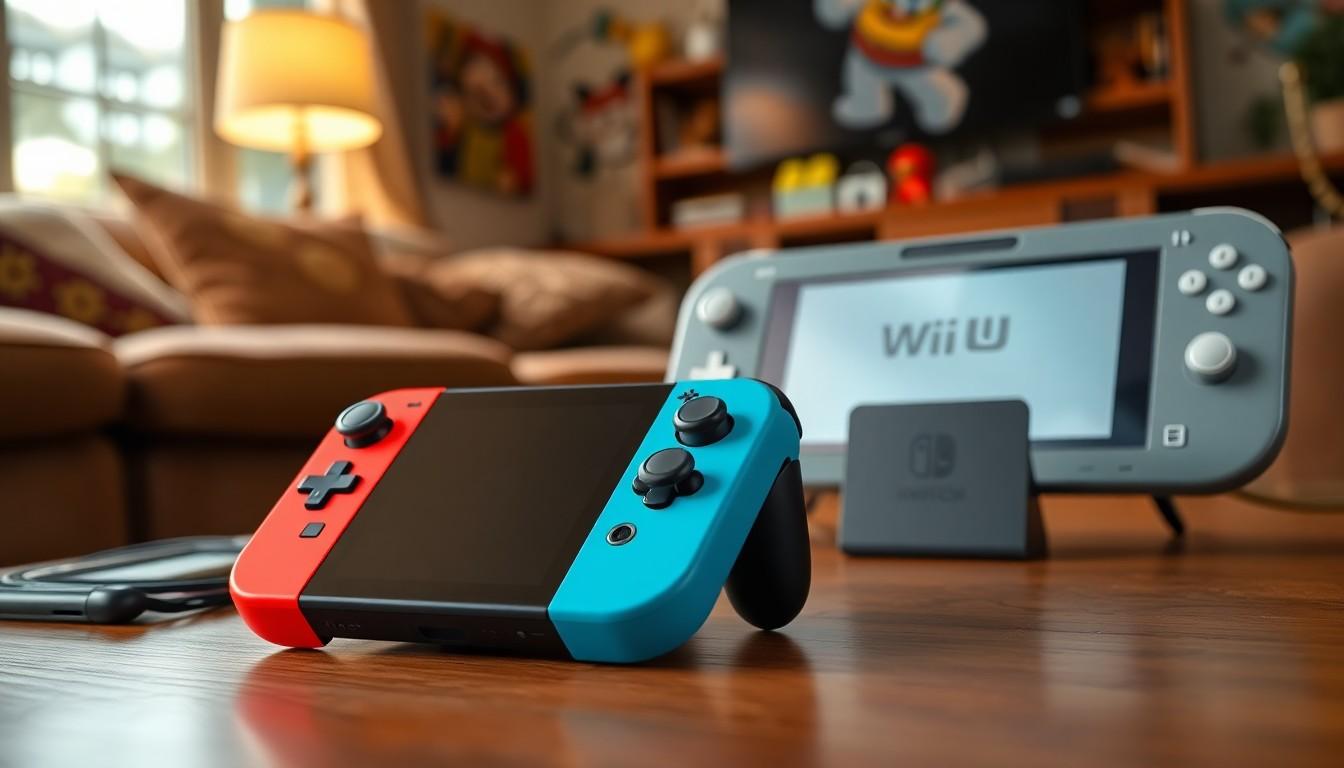
In the battle of gaming consoles, the Nintendo Switch and Wii U stand out like two quirky cousins at a family reunion. One’s a versatile powerhouse that lets you play anywhere, while the other is like that relative who insists on showing off their old-school charm. The Switch has taken the gaming world by storm with its hybrid design and a library of must-have titles, while the Wii U, bless its heart, had its moments but struggled to find its footing.
Overview of Nintendo Switch and Wii U
Nintendo Switch showcases a hybrid design that allows for both handheld and home console gaming. This flexibility contributes to its widespread popularity among gamers. Boasting a robust library of titles, the Switch includes acclaimed games such as “The Legend of Zelda: Breath of the Wild” and “Animal Crossing: New Horizons.” Its ability to connect with friends and family enhances the overall gaming experience.
Contrasting the Switch, the Wii U features a unique GamePad that offers dual-screen gameplay, integrating the television and the controller. While it introduced innovative concepts like asymmetric gameplay, it didn’t achieve the level of success seen with the Switch. The Wii U’s library includes notable titles such as “Super Mario 3D World” and “Splatoon,” but it struggled to capture a larger audience.
Nintendo Switch sold over 122 million units since its release in March 2017, demonstrating its strong market presence. In comparison, the Wii U sold approximately 13.5 million units from its launch in November 2012 until its discontinuation in January 2017. This significant disparity in sales figures highlights the Switch’s broader appeal and effective marketing strategies.
Durability and performance also differ between the two consoles. The Switch is designed to withstand various gaming conditions, appealing to on-the-go players. In contrast, the Wii U’s design focuses more on traditional home gaming. Players seeking an adaptable console often favor the versatile nature of the Switch, while those nostalgic for unique gaming experiences may appreciate the Wii U’s innovative features.
Design and Build Quality

The Nintendo Switch and Wii U showcase distinct design philosophies reflecting their gaming approaches.
Nintendo Switch Design Features
The Nintendo Switch features a sleek, modular design that emphasizes portability. It includes detachable Joy-Con controllers allowing for versatile gameplay. The tablet-like body supports both handheld and docked modes, making it adaptable for various environments. A vibrant 6.2-inch touchscreen enhances the user experience with responsive controls. The build quality remains robust, prioritizing durability during travel. Users often appreciate the smooth transition between single and multiplayer options, facilitating shared experiences. Weight comes in at about 0.88 pounds, ensuring comfort during extended gaming sessions.
Wii U Design Features
The Wii U introduces a unique GamePad that supports dual-screen gameplay. A 6.2-inch touchscreen on the GamePad enables innovative interactions, enhancing traditional gaming. While the main console connects to a television, players can enjoy off-screen gameplay without interruption. The console design is bulkier than today’s standards but features a glossy finish appealing to some users. The Wii U’s overall aesthetic combines function with nostalgia, particularly for those familiar with its predecessor, the Wii. Despite its limitations, the design still offers a dedicated gaming experience centered around family-friendly play.
Performance and Graphics
The performance and graphics of both consoles greatly affect the gaming experience. Each device has unique strengths, making them appealing to different audiences.
Nintendo Switch Performance
The Nintendo Switch excels in delivering versatile performance, catering to both handheld and docked play. A custom NVIDIA Tegra processor powers the device, enabling impressive graphics for a portable console. With support for up to 1080p resolution when docked, gaming visuals remain sharp and vibrant. Players benefit from a stable frame rate, particularly in popular titles like “The Legend of Zelda: Breath of the Wild.” This optimization enhances gameplay, ensuring enjoyment whether at home or on the go.
Wii U Performance
The Wii U, though older, still offers a unique performance experience. Its IBM PowerPC-based architecture manages to support innovative gameplay features like asymmetric gameplay. Maximum resolution reaches 1080p, although performance can vary depending on game optimization. Titles such as “Super Mario 3D World” showcase the console’s capabilities, with bright visuals and engaging graphics. Despite limitations in hardware compared to contemporaries, the Wii U’s creative potential remains notable, particularly for family-friendly titles.
Game Library and Compatibility
The game libraries of the Nintendo Switch and Wii U showcase their distinct strengths and challenges.
Exclusive Titles for Nintendo Switch
Nintendo Switch offers a wealth of exclusive titles that resonate with a broad audience. Popular games include “The Legend of Zelda: Breath of the Wild,” recognized for its immersive open-world experience. “Animal Crossing: New Horizons” stands out as a beloved social simulation title, allowing players to build and customize their islands. Other notable mentions are “Super Smash Bros. Ultimate,” featuring a diverse roster of characters, and “Fire Emblem: Three Houses,” known for its deep storytelling and strategic gameplay. This extensive library contributes significantly to the Switch’s appeal, attracting both casual and hardcore gamers alike.
Exclusive Titles for Wii U
Wii U features a smaller selection of exclusive titles that, while innovative, failed to generate widespread popularity. “Super Mario 3D World” showcases the console’s unique capabilities, allowing for multiplayer gameplay and creative level design. Players fondly remember “Splatoon,” a fresh take on shooter mechanics with its colorful, ink-spraying battles. “Mario Kart 8” introduced the beloved anti-gravity mechanic, providing thrilling racing experiences. While its offerings, such as “Pikmin 3,” highlight engaging gameplay mechanics, these titles weren’t enough to overcome the Wii U’s overall limited visibility in the gaming market.
Online Features and Services
Online features and services play a crucial role in the gaming experience offered by Nintendo consoles. Both the Nintendo Switch and Wii U have distinct approaches to online functionalities.
Nintendo Switch Online Services
Nintendo Switch offers a well-developed online service known as Nintendo Switch Online. This subscription-based service enhances multiplayer gaming by providing access to online play, a NES and SNES game library, and exclusive member discounts. Voice chat and cloud storage for game saves are also included. Gamers enjoy features like online tournaments and special events, making it easy to connect with friends. Dedicated mobile applications complement these offerings, creating a holistic online ecosystem. These services contributed significantly to the Switch’s popularity, appealing to both casual and hardcore gamers.
Wii U Online Services
Wii U features a comparatively limited online service known as Wii U Online. The free service allows for online multiplayer but lacks robust support found in modern platforms. Miiverse was a social networking feature encouraging player interaction, while limited online game purchases were available via the Nintendo eShop. However, functionalities like cloud saves and chat options were not supported. The Wii U primarily focused on local multiplayer experiences, which, although nostalgic, did not match the expectations of today’s gamers. Consequently, this constriction hampered the console’s online appeal.
Price and Value Comparison
Nintendo Switch commands a retail price around $299. It offers a strong value due to its versatility and library of exclusive titles. Many players appreciate the option to switch between handheld and console gaming. Nintendo Switch also provides ongoing sales and discounts, making it accessible for a wider audience.
In contrast, Wii U’s initial launch price was approximately $299 too. However, it now retails for much less, typically around $100 to $150 at resale. Various factors contribute to its lower price, including its limited game library and reduced popularity. Despite this decline, it provides value for collectors and those interested in niche titles.
Sales data highlights the value disparity. Nintendo Switch has sold over 122 million units, while Wii U’s sales reached only about 13.5 million. This stark difference indicates the Switch’s broader appeal and strong ongoing support from developers. More gamers now find better value in the Switch’s robust library and online features.
Comparatively, the libraries reflect each console’s pricing strategy. Enthusiasts benefit from the high volume of popular exclusives on the Switch. Innovative titles like “The Legend of Zelda: Breath of the Wild” contribute to its standing as a preferred gaming choice. Wii U, despite a smaller offering, holds unique gems like “Super Mario 3D World.” Players seeking nostalgia often view these titles as valuable investments.
Ultimately, decision-making depends on preferences. Gamers interested in the latest technology and extensive game libraries typically gravitate towards the Nintendo Switch. Those seeking unique experiences and classics might find the Wii U a worthwhile, albeit less expensive, option.
Conclusion
Choosing between the Nintendo Switch and Wii U ultimately depends on individual gaming preferences. The Switch stands out for its versatility and extensive library of popular titles that cater to a wide audience. Its hybrid design and robust online features make it a top choice for modern gamers seeking flexibility.
On the other hand, the Wii U offers a nostalgic experience with unique gameplay mechanics and a dedicated selection of family-friendly titles. While it may not have achieved the same commercial success, it still holds value for collectors and those interested in its innovative features.
Both consoles have their strengths and weaknesses, making them appealing to different types of players. Whether one prefers the latest technology or a classic gaming experience, each console has something to offer.