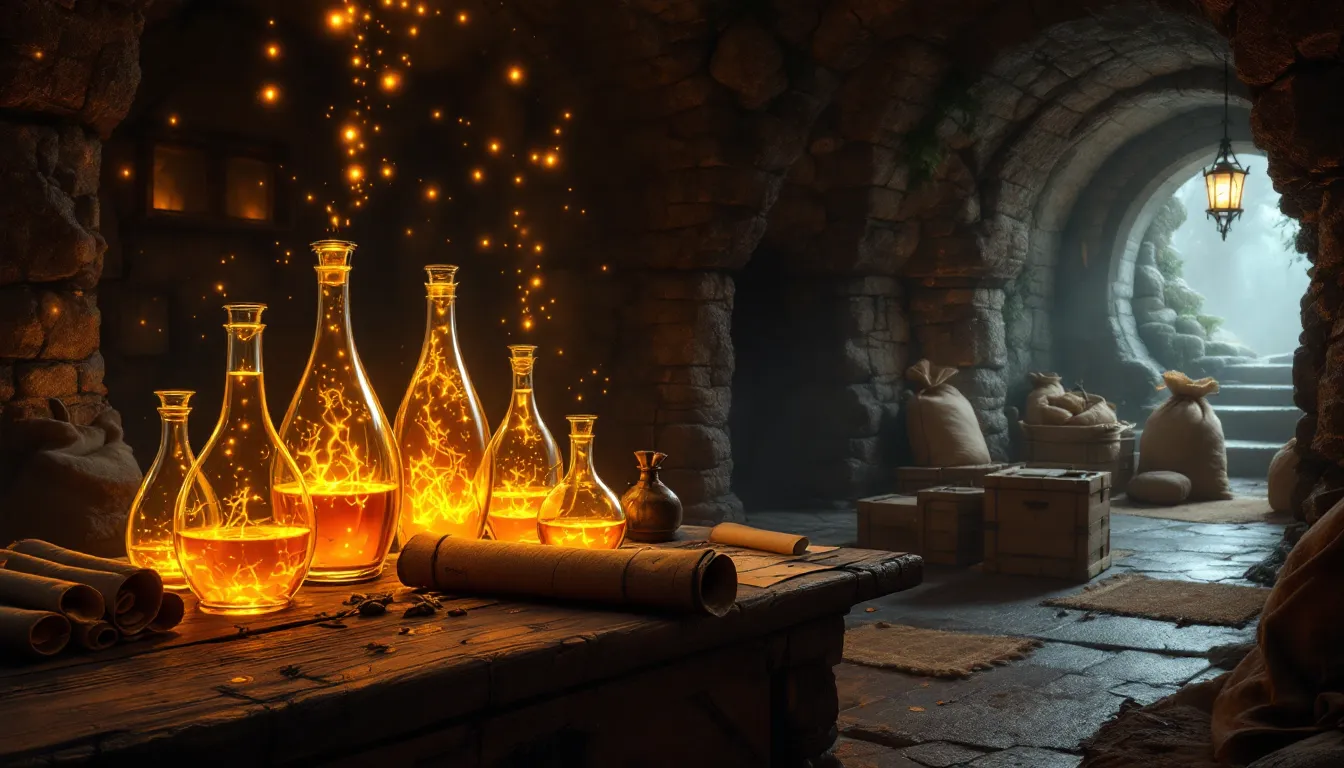
Skooma. Just mentioning the word in Tamriel is enough to get suspicious looks from guards and curious glances from thieves. This infamous narcotic has been a staple of Elder Scrolls lore since Morrowind, and in Skyrim, it continues its legacy as the most recognized illegal substance in the game world. But what exactly does skooma do? Where can players find it? And is it actually useful, or just a lore-heavy item collecting dust in your inventory?
For new players stumbling across their first bottle in a bandit camp, skooma might seem like just another consumable. For lore enthusiasts, it’s a window into the darker side of Tamriel’s economy and social issues. This guide covers everything from the narcotic’s in-game effects and stats to quest lines, acquisition methods, and even how the modding community has expanded on Bethesda’s original implementation. Whether you’re chasing achievements, roleplaying a morally grey character, or just wondering if that bottle is worth keeping, you’ll find answers here.
Table of Contents
ToggleKey Takeaways
- Skooma in Skyrim provides a +25 stamina boost for 25 seconds but reduces your maximum stamina by 25, making it mechanically inferior to crafted stamina potions for combat use.
- The skooma trade is woven into Skyrim’s lore as a serious social issue involving criminal organizations, though it remains optional for gameplay purposes.
- You can find skooma at bandit camps, Riften’s criminal locations, Cragslane Cavern, and Redwater Den, or purchase it from Khajiit caravans and black-market fences.
- The quest ‘The Raid’ in Riften allows you to disrupt a skooma operation and help an addict get clean, offering one of the few moral opportunities to combat the drug trade.
- Mods significantly expand skooma mechanics with crafting recipes, addiction systems, dealer questlines, and economy integration that transform it from vendor trash into meaningful gameplay.
- Double-Distilled Skooma from the Dawnguard DLC offers doubled effects but maintains the same net-zero stamina value as standard skooma despite its darker origins at vampire-infested Redwater Den.
What Is Skooma in Skyrim?
Skooma is a potent, illegal narcotic consumed throughout Tamriel, crafted primarily from moon sugar, a substance refined from the lunar-sensitive crops grown in Elsweyr, the homeland of the Khajiit. In Skyrim, it appears as a glowing, amber-orange liquid in a distinctive curved bottle, instantly recognizable to anyone who’s looted a bandit hideout or stumbled into the wrong warehouse.
The Lore and History of Skooma
The history of skooma runs deep through Elder Scrolls lore. Moon sugar, the base ingredient, holds religious significance to the Khajiit, who believe it connects them to the moons Masser and Secunda. But, when moon sugar is refined and distilled into skooma, it becomes a highly addictive substance that’s illegal across most of Tamriel.
By the Fourth Era (when Skyrim takes place), the skooma trade is controlled largely by criminal organizations. The drug has devastated communities, created black markets, and fueled organized crime across the provinces. In Skyrim specifically, the substance is smuggled through various networks, often involving corrupt guards, desperate addicts, and opportunistic Khajiit caravans (though it’s worth noting that most Khajiit merchants are legitimate traders unfairly stigmatized by Nord prejudice).
The social impact is visible throughout the game. NPCs reference skooma dens, guards make snide remarks about addicts, and certain locations show the deterioration caused by the trade. Bethesda wove the drug into the world’s fabric as more than just a gameplay item, it’s a commentary on addiction, xenophobia, and the criminal underworld.
Skooma’s Effects and Stats in Gameplay
From a pure gameplay perspective, Skooma is disappointingly mundane for such a notorious substance. When consumed, it provides:
- +25 Stamina for 25 seconds
- -25 Stamina damage (reducing your maximum stamina pool temporarily)
That’s it. No visual hallucinations, no addiction mechanics in the vanilla game, no long-term consequences. The stamina boost is immediate but comes with a drawback that makes it less useful than a standard stamina potion in most situations. The effect essentially borrows from your future stamina pool to give you a short-term boost, mechanically representing the “crash” that comes after using stimulants.
Compared to crafted potions or even common stamina draughts, skooma’s risk-reward ratio is poor. A well-made Stamina Potion can restore 100+ stamina with no downside, while skooma’s net benefit is zero (you gain 25 but lose 25). The only scenario where it shines is if you need stamina right now and don’t care about the next 25 seconds.
How to Obtain Skooma in Skyrim
Skooma isn’t sold in legitimate shops, and you won’t find it on the shelves of apothecaries in Whiterun or Solitude. Acquiring it requires a bit of exploration, some light criminality, or knowing where the less-reputable merchants operate.
Finding Skooma in the World
The most reliable way to get skooma is simply exploring Skyrim’s criminal underground. Bottles spawn in predictable locations:
- Bandit camps and hideouts: Nearly every significant bandit den has at least one bottle lying around, often near bedrolls or in storage areas.
- The Riften area: Given Riften’s reputation as Skyrim’s crime capital, skooma appears frequently in the city’s warehouses, the Ratway, and surrounding locations.
- Cragslane Cavern: This location, tied to an illegal fighting ring, has multiple bottles scattered throughout.
- Redwater Den: This location is essential for skooma hunters, serving as an active skooma den with unique narrative implications (more on this in the quest section).
Random world containers in seedy locations occasionally spawn skooma, but it’s not as common as standard loot.
Purchasing Skooma from Dealers
A handful of merchants will sell skooma under the table. These aren’t marked explicitly in dialogue but appear in their trading inventories:
- Khajiit caravans: The traveling merchants who camp outside major cities occasionally stock skooma in their general goods. Not all caravans carry it consistently, as inventory is partially randomized.
- Enthir at the College of Winterhold: This fence deals in illicit goods and sometimes has skooma available.
- The Ragged Flagon merchants: After progressing through the Thieves Guild questline, the merchants in the Flagon’s cistern may stock small quantities.
Prices typically hover around 25-50 gold per bottle, making it neither particularly cheap nor expensive.
Looting Skooma from Enemies and Locations
Bandits, smugglers, and certain NPCs carry skooma in their inventories. Looting corpses after clearing dungeons often yields a bottle or two, particularly in locations with connections to organized crime. The Thalmor, interestingly, never carry skooma, Bethesda’s attention to faction-appropriate loot.
Some players report finding skooma in the inventories of Skyrim monsters like Falmer, though this is less common and likely represents them looting from previous victims rather than consumption.
The Skooma Trade Quest: Disrupting the Operation
One of Skyrim’s more memorable side quests revolves around dismantling a skooma operation. While not a lengthy questline, it offers environmental storytelling and some decent loot.
Starting the Quest
The quest “The Raid” is given by Wujeeta, an Argonian dockworker in Riften. You’ll find her working at the Riften docks or inside the city. She’s a skooma addict, and if you speak with her, you can offer to help her get clean. She’ll ask for a healing potion (any health potion works), and in return, she’ll reveal where she gets her skooma.
After this conversation, you’ll need to report the information to the Jarl of Riften or the court wizard. This triggers the next phase, where you’re asked to investigate Cragslane Cavern.
Investigating the Skooma Den
Cragslane Cavern, located southeast of Riften, serves as an underground fighting arena with connections to the skooma trade. When you arrive, you’ll encounter hostile NPCs including bandits and the cavern’s operators.
Clearing the location involves standard dungeon crawling, dispatch the enemies, loot the containers, and find evidence of the operation. The cavern has multiple levels, with the fighting pit as the centerpiece. Players sometimes use builds focused on powerful magic to clear the tight corridors efficiently.
Quest Rewards and Outcomes
Completing the quest yields:
- A leveled gold reward from the Jarl or steward
- Access to loot in Cragslane Cavern, including coin, potions, and enchanted weapons
- Wujeeta’s gratitude and some additional reputation in Riften
The quest doesn’t have branching paths or moral choices, you disrupt the operation, period. For roleplayers, it’s one of the few opportunities to actively combat the skooma trade rather than participate in it.
Double-Distilled Skooma: The Stronger Variant
In the Dawnguard DLC, Bethesda introduced Double-Distilled Skooma, a more potent version of the standard narcotic. This variant appears exclusively at Redwater Den, a skooma den with a vampiric twist.
Redwater Den, located in the Rift hold southeast of Riften, masquerades as a skooma den but is actually a feeding ground for vampires. The establishment offers “Redwater Skooma” to visitors, which is actually skooma laced with sleeping agents. Patrons pass out and become easy prey for the vampires operating below.
Double-Distilled Skooma has improved effects compared to regular skooma:
- +50 Stamina for 25 seconds
- -50 Stamina damage
The mechanics are identical to standard skooma, just doubled. It’s still not particularly useful compared to crafted potions, but lore enthusiasts appreciate the distinction. The doubled potency reflects the “premium” nature of this illegal product, though the doubled drawback maintains the same net-zero practical value.
Redwater Den contains numerous bottles of both standard and double-distilled variants, making it the single best location for skooma farming if you’re collecting for sale or roleplay purposes. The den’s discovery is often mentioned in game guides covering Dawnguard content, as it’s one of the DLC’s more atmospheric locations.
Uses for Skooma: When to Actually Use It
Given skooma’s underwhelming stats, when, if ever, should players actually consume it?
Combat Scenarios
Skooma’s stamina boost has niche applications in specific combat builds:
- Power attack spam: Builds centered on two-handed weapons or dual-wielding that rely on power attacks can use skooma for a burst of stamina mid-combat. The temporary boost lets you execute 2-3 additional power attacks before the penalty kicks in.
- Sprinting away from danger: If you’re low-level, overmatched, and need to sprint away immediately, skooma gives you that burst. The stamina debt doesn’t matter if you’re already fleeing.
- Bashing and blocking: Shield-based builds that rely on bashing to stagger enemies can benefit momentarily from the extra stamina pool.
In practice, skilled players rarely rely on skooma because better alternatives exist at every stage of the game. Vegetable soup (which provides 1 stamina per second for 720 seconds) is infinitely more useful and has no drawback.
Selling for Gold
Skooma’s most practical use is as vendor trash. Each bottle sells for 20-25 gold, and because it’s lightweight and found in bulk at locations like Redwater Den, it’s decent inventory filler when you’re clearing dungeons.
Fences in the Thieves Guild will buy skooma without hesitation, and it doesn’t count as stolen goods if you looted it from enemies or found it in the world (not taking it from owned containers).
Roleplaying Opportunities
For players who prioritize immersion and character consistency over optimization, skooma offers roleplaying depth. Running a morally grey thief or assassin who occasionally uses narcotics adds texture to your playthrough. Some players impose self-restrictions, like having their character consume skooma before difficult heists or when stressed.
Choosing different racial backgrounds can inform how you roleplay skooma use, a Khajiit character might have complex feelings about the substance given their people’s connection to moon sugar, while a Nord might view it with pure disdain.
Skooma vs. Other Potions and Drugs in Skyrim
Skyrim features a small selection of substance-type consumables beyond standard potions. How does skooma stack up?
Standard Stamina Potions: These are superior in every way. A basic Stamina Potion restores 25-30 stamina with no drawback, while a Potion of Vigorous Stamina can restore 100+. They’re craftable, purchasable, and found everywhere. Skooma’s temporary boost with permanent penalty makes it objectively worse.
Sleeping Tree Sap: This substance is obtained from the Sleeping Tree in the volcanic tundra of Whiterun Hold. It provides a huge stamina regeneration boost (100% for 60 seconds) but causes damage over time. It’s actually more interesting mechanically than skooma and can be sold for more gold (150 per bottle).
Redwater Skooma (the laced variant at Redwater Den): This isn’t technically a usable item, NPCs drink it and pass out. If you consume it via console commands or glitches, it functions as a sleep effect.
Ales, Wines, and Meads: These alcoholic beverages provide minor stamina regeneration or other small buffs with minimal downsides. Black-Briar Mead and Honningbrew Mead are common throughout Skyrim.
Compared to the competition, skooma occupies an odd space: too weak to be tactically valuable, too common to be special, but too lore-rich to ignore entirely. Its reputation exceeds its utility, the substance is famous for its narrative role, not its gameplay impact.
Can You Craft or Brew Skooma?
In vanilla Skyrim, the answer is a firm no. Skooma cannot be crafted at an alchemy station, cooking pot, or any other crafting interface. This is a deliberate design choice, Bethesda likely wanted to avoid the controversy of letting players manufacture illegal narcotics, even in a fictional fantasy setting.
Moon sugar, the base ingredient for skooma in lore, is present in the game as a consumable item. It appears in inventories and containers similarly to skooma, and it’s also illegal in Skyrim. But, there’s no recipe to convert moon sugar into skooma.
Moon sugar effects:
- Restores 5 points of stamina
- That’s it, incredibly weak for a substance with such lore weight
The disconnect between lore (moon sugar as a powerful base for skooma) and gameplay (moon sugar as a near-useless consumable) has frustrated players since launch. Discussions about this design choice frequently appear in RPG community forums where fans debate Bethesda’s balancing decisions.
If you’re looking to craft skooma for roleplay or profit, you’ll need to turn to mods. Vanilla Skyrim keeps the production side of the skooma trade firmly in NPC hands.
Skooma in Mods and Player-Created Content
The modding community, unsurprisingly, has taken skooma far beyond its vanilla implementation. Dozens of mods expand, enhance, or completely overhaul how the narcotic functions in Skyrim.
Popular Skooma-Related Mods
Several standout mods have gained significant downloads on modding platforms:
- Skooma Dealer: Adds a full quest line where you manage a skooma distribution network, complete with NPCs, territory control, and moral consequences.
- Become a Skooma Chef: Allows crafting skooma and moon sugar products at cooking stations, with recipes requiring alchemy ingredients and specific equipment.
- The Honored Dead: While primarily a vampire overhaul, this mod integrates Redwater Den more deeply and expands the skooma den’s lore.
- Immersive Skooma: Adds addiction mechanics, visual effects when consuming skooma, and withdrawal symptoms that debuff your character until you use again or complete a detox quest.
These mods transform skooma from a throwaway consumable into a meaningful gameplay system. Players interested in unique equipment sets often pair skooma mods with immersion overhauls for fully realized criminal playthroughs.
Enhanced Skooma Mechanics
Beyond quests and crafting, some mods alter skooma’s fundamental effects:
- Increased potency: Some balance mods buff skooma to be competitive with high-tier stamina potions, making the risk-reward more interesting.
- Hallucination effects: Visual shader mods that apply psychedelic overlays when consuming skooma, simulating intoxication.
- NPC reactions: Mods that make guards, merchants, and faction members react to you carrying or using skooma, with potential for arrest or reputation loss.
- Economy integration: Mods that add player-run drug trade mechanics, with supply chains, rival dealers, and profit management.
For players who enjoy customizing their weapons and gameplay systems, skooma mods offer similar depth in a completely different aspect of Skyrim’s world. The modding scene has essentially realized the potential that vanilla skooma hinted at but never delivered.
Conclusion
Skooma represents one of Skyrim’s most interesting contradictions: a substance dripping with lore significance but mechanically hollow in actual gameplay. Bethesda built an entire underworld around this narcotic, quests, locations, NPC dialogue, and environmental storytelling all reinforce its importance to Tamriel’s criminal ecosystem. Yet when you actually consume it, the effect is forgettable at best and counterproductive at worst.
For pure optimization, skooma is vendor trash. Sell it to fences, ignore it in dungeon chests, and stick to crafted potions for your stamina needs. But for players who value narrative, atmosphere, and roleplay, skyrim skooma is a window into the game’s darker corners. Exploring the skooma trade through quests like “The Raid,” discovering the horrifying truth of Redwater Den, or installing mods that expand the system, these experiences tap into what makes Skyrim memorable beyond its combat and loot.
Whether you’re a completionist clearing every location, a roleplayer crafting a morally complex character, or a lore enthusiast digging into Tamriel’s history, skooma deserves more than a quick scroll-past in your inventory. It’s Bethesda’s subtle reminder that even in a world of dragons and magic, the most human, and darkest, stories often revolve around addiction, exploitation, and survival.